
by Nebula Haze
When cannabis plants are recovering from heat shock, some growers recommend using seaweed kelp extract (available as a liquid plant fertilizer) to help cannabis plants recover from the stress and possible protect plants against heat stress in the future.
General Temperature Range for Cannabis – 65-85° (18-30°C). Cannabis plants tend to like it a bit warmer when young, and cooler once buds start forming.

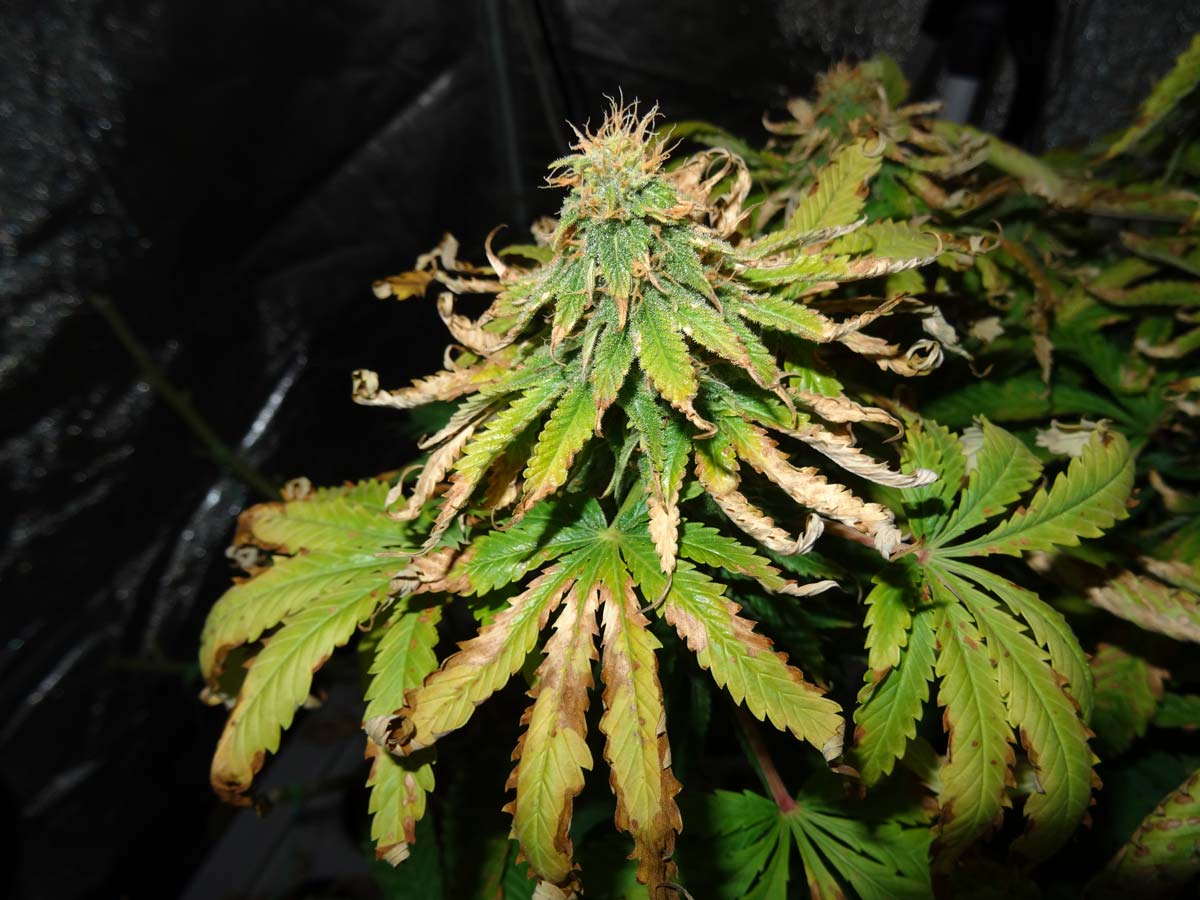
Problem: Your cannabis plant can only withstand a certain amount of heat and light. After a certain point, your cannabis will start exhibiting signs of stress on the leaves near the sources of light and/or heat. Your leaves will get yellow or brown brown spotting and may appear generally burnt in places when there’s too much light. It’s also common for leaves to curl up or down, fold inward like canoes or tacos, and for the serrated edges of leaves to start flipping up. What else can cause dry, crispy marijuana leaves?
This cannabis plant suffered from the grow light being too close along with major heat stress during a heatwave in Southern California.
Important for Hydroponic Growers! High temps can trigger root rot, a serious problem that can kill cannabis plants (especially young plants). It’s especially important you do not disturb roots of hydro plants in the heat.
Cannabis may display heat stress when grown outdoors in hot weather, especially if plants are not given enough water or roots cook in the sun. Plants in big pots with lots of soil (or planted in the ground) are much more resistant to heat stress because roots stay cool.
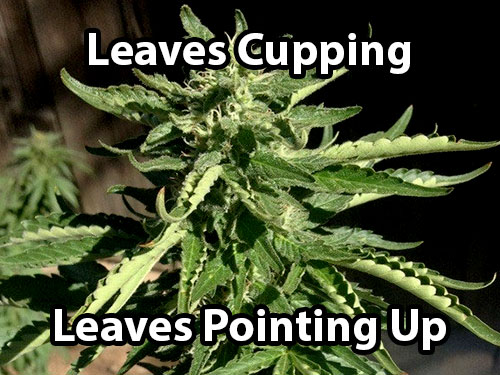
When the heat gets too high, the edges of the serrated leaves begin to curl up even if there are no burns or other signs of light stress.
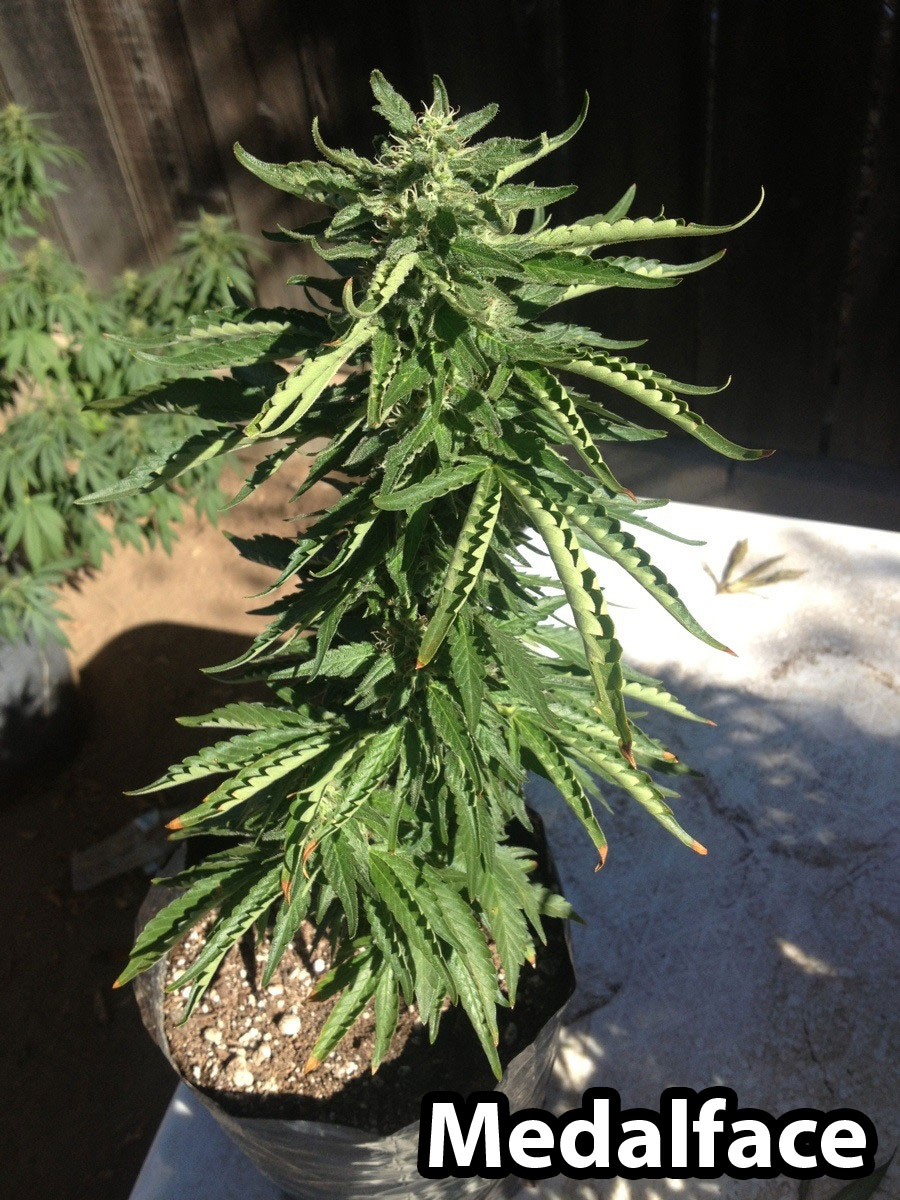
Too much heat causes the edges of cannabis leaves to curl up . Heat-stressed leaves may begin to “cup.”
Heat Stress
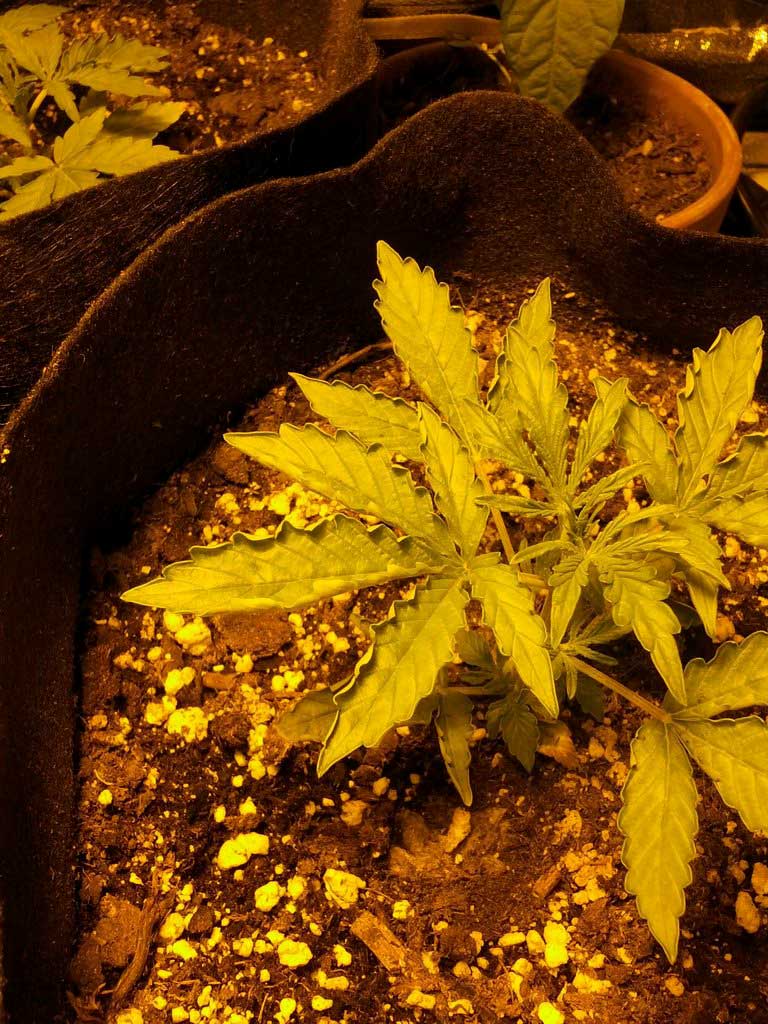
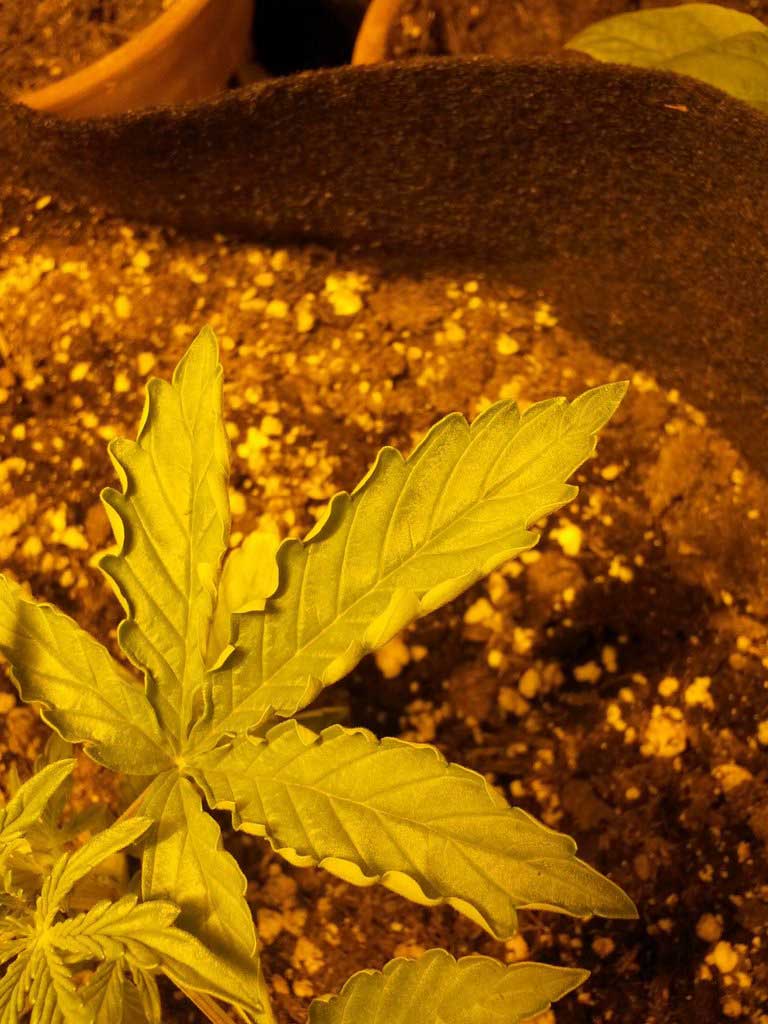
Very low or high humidity can make plants more likely to get stressed by the heat. Sometimes you’ll get symptoms that look like heat stress even if it’s barely hot, especial if the humidity is off or the grow light is too close.
Tipped-up edges of leaves is often a sign of heat or light stress (though it can also be root or watering problems).
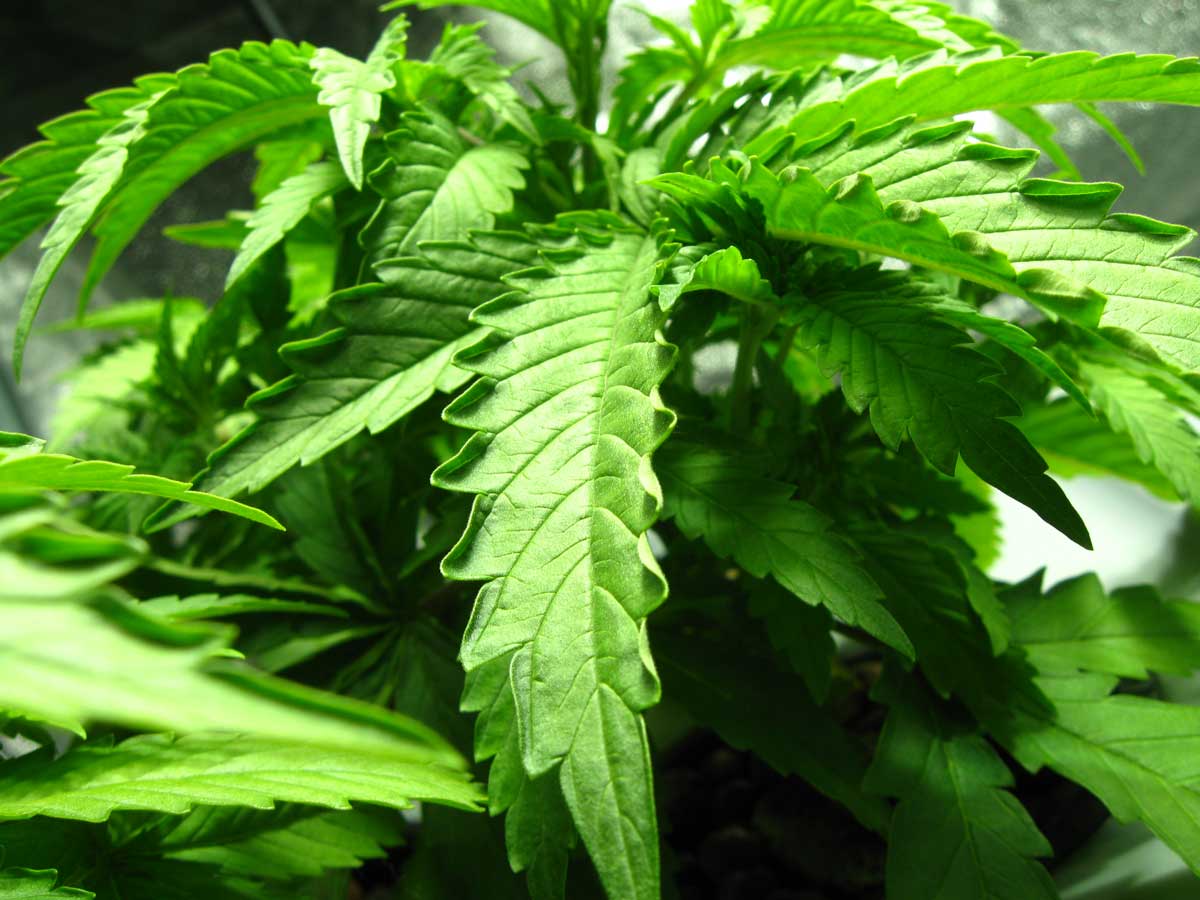
Heat stress is even more damaging in the flowering stage since buds are forming and the plant is no longer growing many new leaves.
Indica-leaning strains are most prone to heat damage in the flowering stage. Heat damage during budding can reduce yields by demolishing many of your most important leaves, while also causing buds to grow airy with ugly foxtails.
Even though the grow lights were turned down, this is what happened to an indica-leaning plant overnight after being exposed to 105°F (40°C) temperatures during a heat wave.
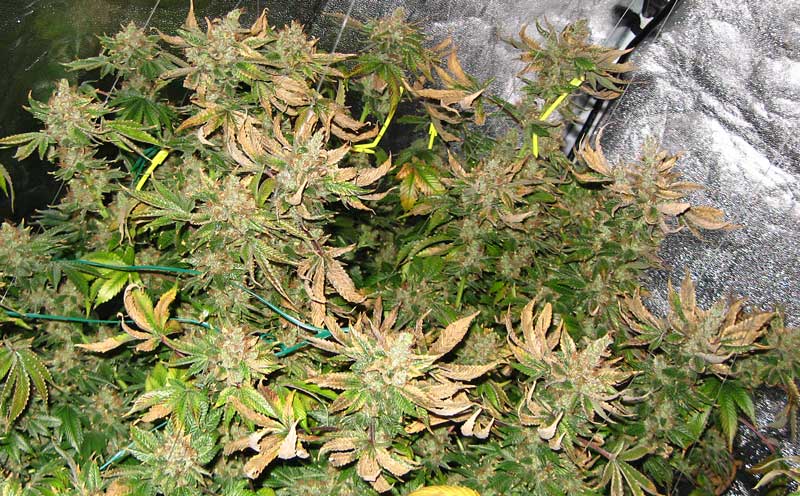
If flowering cannabis plants are grown under too-hot conditions for a long time, sometimes they respond by growing new buds on top of the old ones.
When you see extensive growth on top of the buds closest to the grow lights, that’s a sign that the grow light is too close or the temperature is too high. Some people call the new growth (which often grows in spires) fox tails.
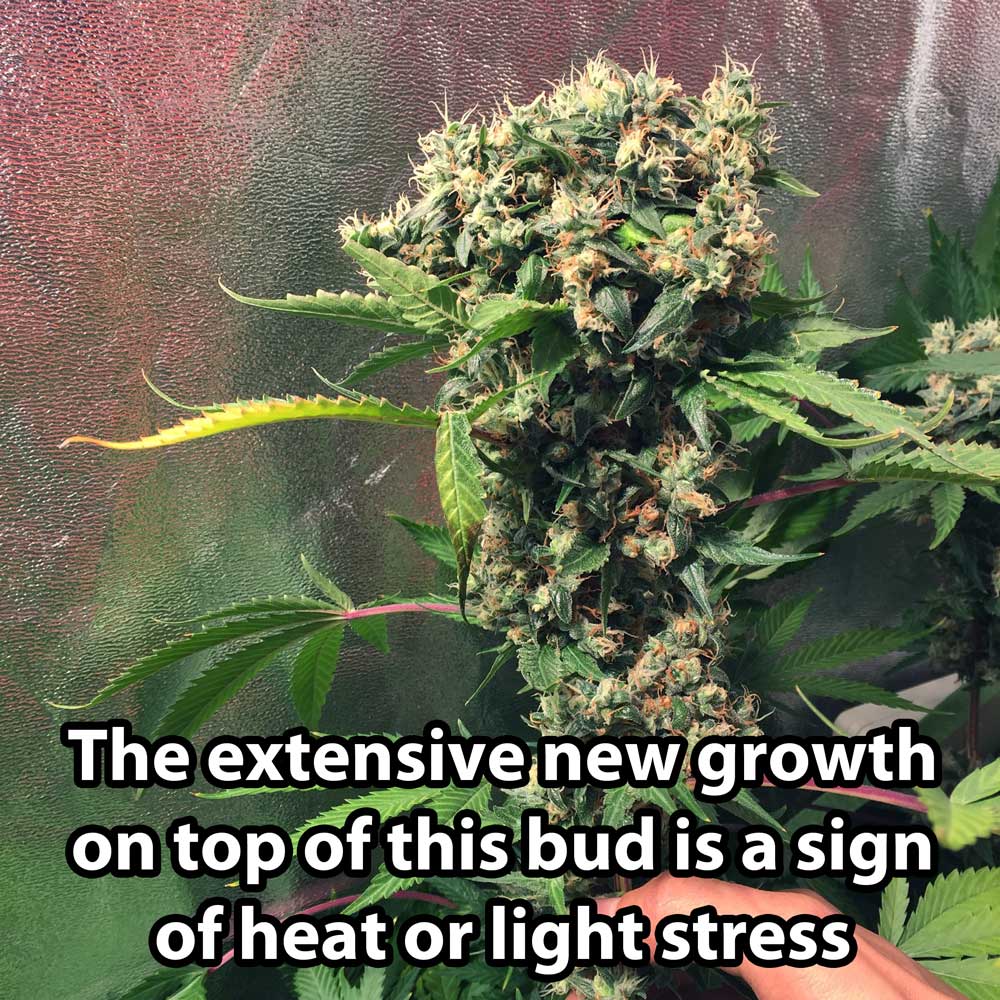
If it seems like your cannabis plants are completely ready for harvest, but they keep putting out new white pistils at the top of the plant, it might just be heat. If that’s the case, pay attention to the lower growth to decide when to harvest.
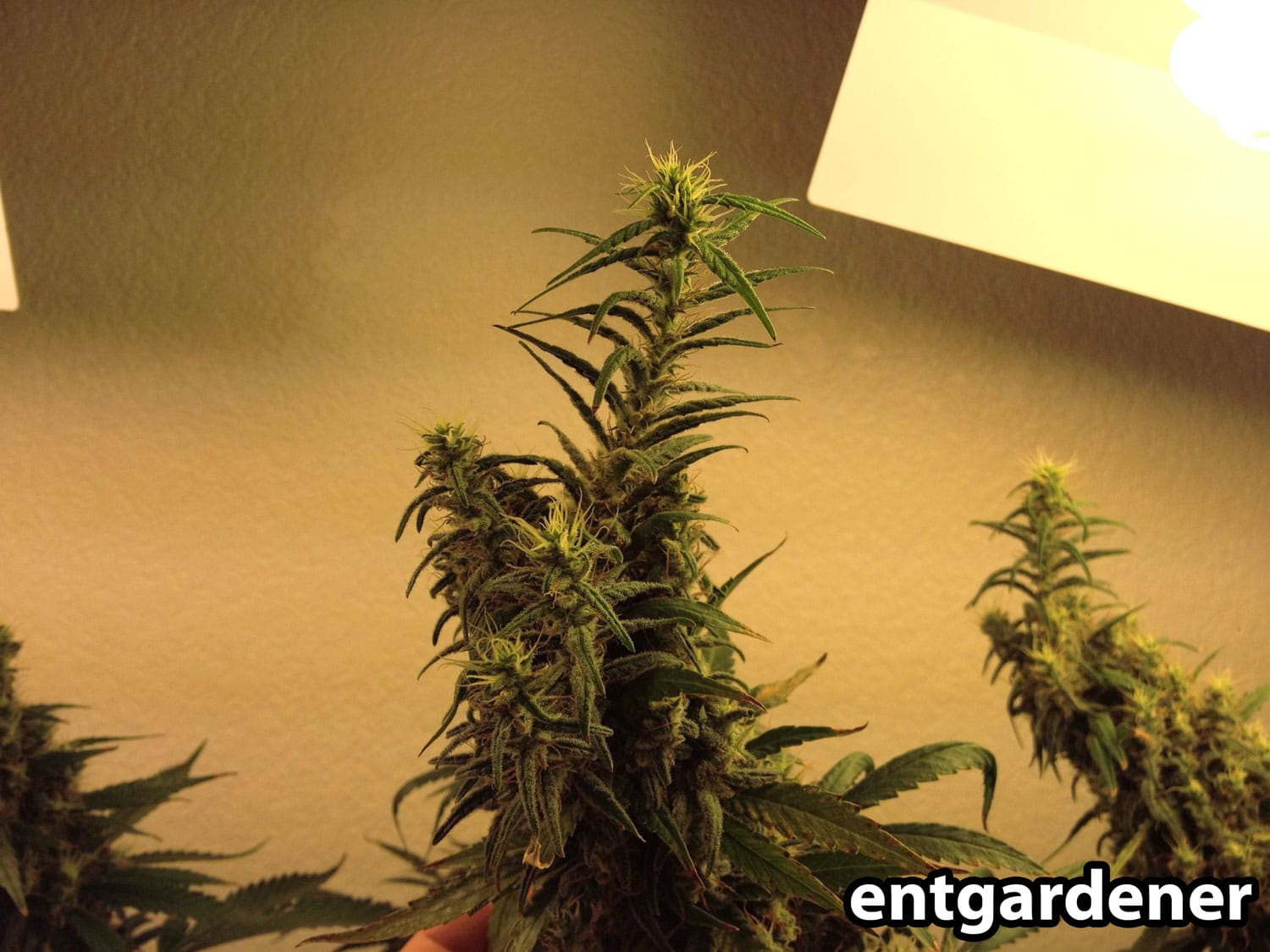
Heat during the flowering stage also causes fox-tails, which are airy and don’t have much substance to them. It’s basically the same response as growing new buds on top, it just looks a little different on some plants. The plant is basically “abandoning” the original heat-damaged bud to try to make a sad new one.
Example of unwanted cannabis “fox-tailing” caused by too much heat.
Solution: Get a thermometer to monitor temperature. Control heat by whatever means necessary using the steps outlined below.
Learn 5 secrets to controlling heat in the grow room.
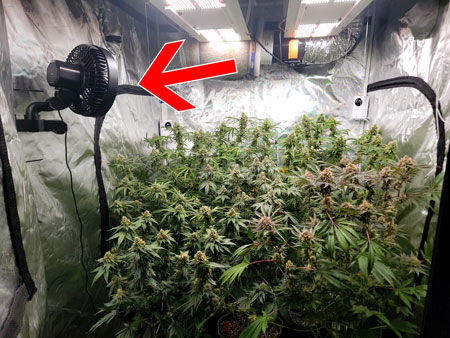
Indoors, find a way to lower the temperature and/or increase the circulation in the grow room or grow area if heat is the problem. Having a small fan blowing over the tops of your plants will help prevent hot spots from forming directly under your grow lights. How far away should you keep your grow lights from your plants?
You may consider removing grow lights further away from the tops of the plants if heat is a problem.
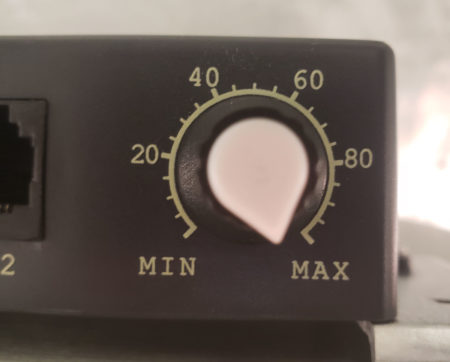
If you’ve got a dimmable grow light, dimming your grow light both reduces light intensity and makes the light give off less heat. Just remember that less light = less food for plant leaves.
Reduce power – Dim LED grow lights to reduce heat in the grow space.
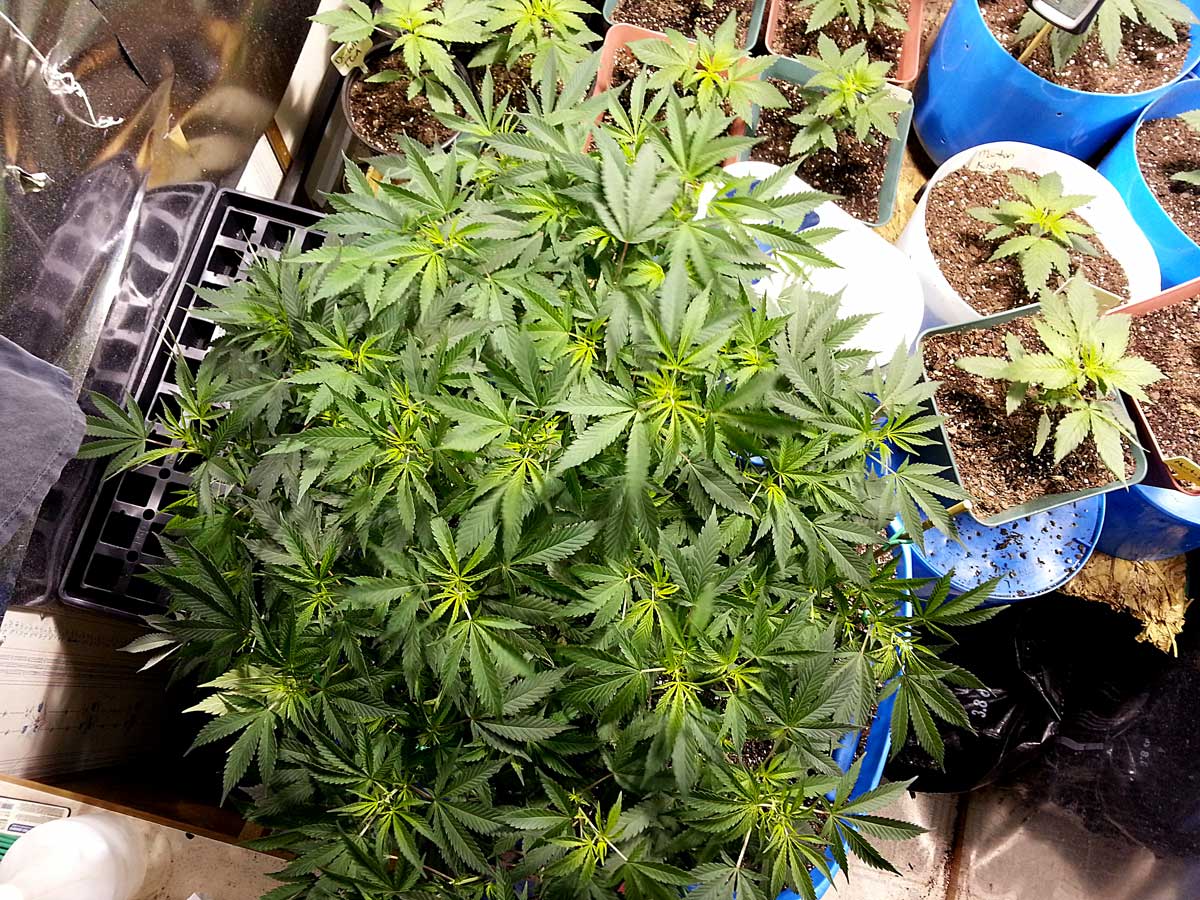
When growing cannabis, it’s best to try to keep things at a comfortable room temperature at all times for optimal growth. If it’s too hot for you, it’s probably too hot for your plants.
- Don’t let roots dry out – The worst thing you can do for heat-stressed plants is let them get underwatered. Make sure to water them regularly, but don’t drown the roots either.
- Lights on at night – Change your timer so your grow lights turn on at night instead of during the hottest hours.
- Use an exhaust fan to vent heat directly outside instead of directly back into the grow space.
- Add airflow with a small fan – This small oscillating fan clips right on the bars of a grow tent and offers great air circulation in a grow tent.
- Make sure intake air is cool – Your grow tent will always be warmer than the intake air due to the grow light, so if your intake air is hot your grow space will be even hotter.
- Dim and/or raise grow lights – Dimming reduces both heat and light intensity. But even if your lights aren’t dimmable, just raising the light helps plants be more resistant to heat stress.
- Keep roots cool – A cannabis plant with cool roots can withstand much higher temperatures than a plant with hot roots. A plant with lots of leaves offers extra shade to the roots. A bigger pot with lots of soil also tends to make plants more resistant to heat.
If you can keep your roots cool, it will help your plant deal with heat affecting the top of the plant. If there’s some way to protect the roots from heat, do it.
Many indoor setups will require that you vent out hot air using a fan and/or an exhaust system. By creating good suction with an efficient exhaust system and adding a carbon scrubber, you can also pretty much scrub all smells from the grow room. Learn more about controlling odors in the grow room.
An oscillating fan will circulate air in the room as well as provide a gentle breeze for your plants.
A tiny fan that adds a little air for a small 2’x2′ space costs about $20.
If your space is bigger than 2’x2′, get a grow tent and invest in one of these grow tent oscillating fans. They provide gentle steady airflow. I’ve not gotten bud rot even on fat colas since I starting using these for extra airflow in the grow tent.
These small oscillating fans clip to the bars of your grow tent.
Learn everything you need to know about controlling temperature in the grow room.
Outdoors, you have less options to reduce heat during a heat wave, but you are able to monitor your local weather via weather forecasts.
Read the full tutorial on how to help outdoor cannabis plants in the heat.
It is possible to partially shield your plants when you know the temperature is going to get hot. You can also adjust your watering schedule to make sure plants at least have plenty of water.
Outdoors – some things to try when you know the weather outside is going to be hot or dry:
- Don’t let soil dry out – The worst thing you can do for a cannabis plant that’s heat-stressed is also let it get underwatered.
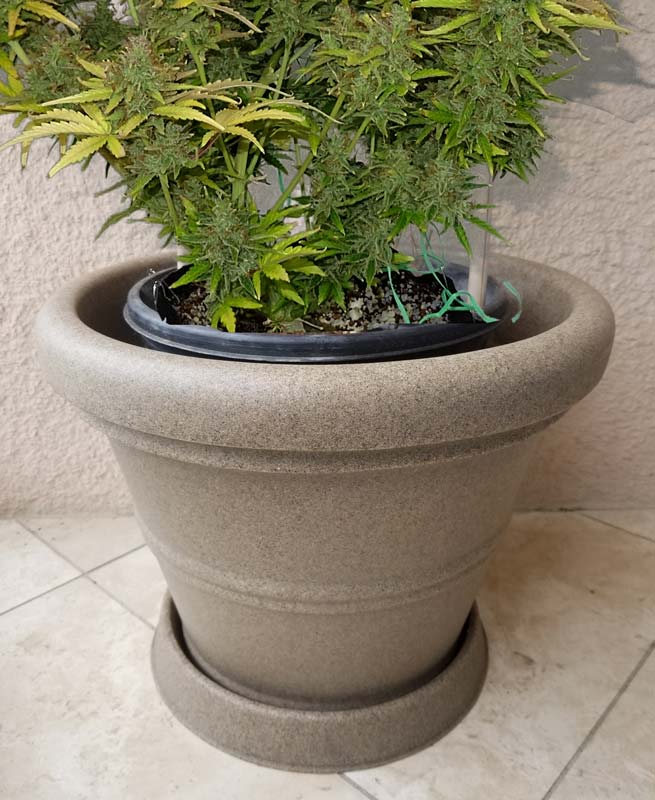
- Keep roots cool – A plant with comfortable roots can withstand far higher temperatures than a plant with roots that are cooking. This is part of why plants in the ground tend to be much more resistant to heat than potted plants. Put your potted plant in a bigger pot to help insulate the roots from the sun. I’ve also heard of growers digging a hole in the ground to place their potted plant inside, because the ground is almost always cooler than the air when the temperature gets high.
- Increase shade outdoors to reduce the heat experienced by plants. You can use an old sheet or other cloth as a short term solution, or get a professional Sun Shade Cloth which is made particularly to create shade outdoors for plants. Note: After a few days of shade, plants start to become less “hardened” to the sun, even after it gets cooler. You may need to reintroduce full sunlight back slowly to prevent them from getting shocked from the light intensity.
- Add mulch to help prevent water evaporation and keep roots cooler.
- Water plants in the early morning or evening so the water doesn’t immediately evaporate during the hottest hours.
- Kelp extract for roots – Provide a small amount of liquid fertilizer that contains seaweed kelp extract, which some growers claim help protect against heat stress.
- Move potted plants – Luckily with potted plants, it’s usually easier to move them out of direct sunlight during a heat wave
Put a your pot inside a bigger pot to protect roots from the heat.
Take extra good care of heat-stressed plants – When cannabis plants appear heat-stressed, try to baby them as best you can. Most important: Try not to let them dry out, keep roots from getting hot, and offer some shade if it’s really hot.
When growing cannabis outdoors, it can often take a few weeks for plant to recover after a hot or dry spell, so prevention is the best medicine for outdoor plants.
Jump to…
Air Circulation & Exhaust Tutorial
7 Tips to Growing Top-Shelf Buds