by Nebula Haze
How do I get my cannabis plant to make buds? Cannabis is a “photoperiod” plant, which means the hours of light received each day decides when the plant starts “flowering” or making buds. Today, learn how much light per day your photoperiod cannabis plants need to grow to the right size, start budding when you want, and produce a great harvest! What about auto-flowering strains?
Vegetative Stage – 18-24 hours of light a day
Flowering Stage – 12 hours light & 12 hours dark a day
Daily light schedules control when photoperiod cannabis start making buds (flowering).
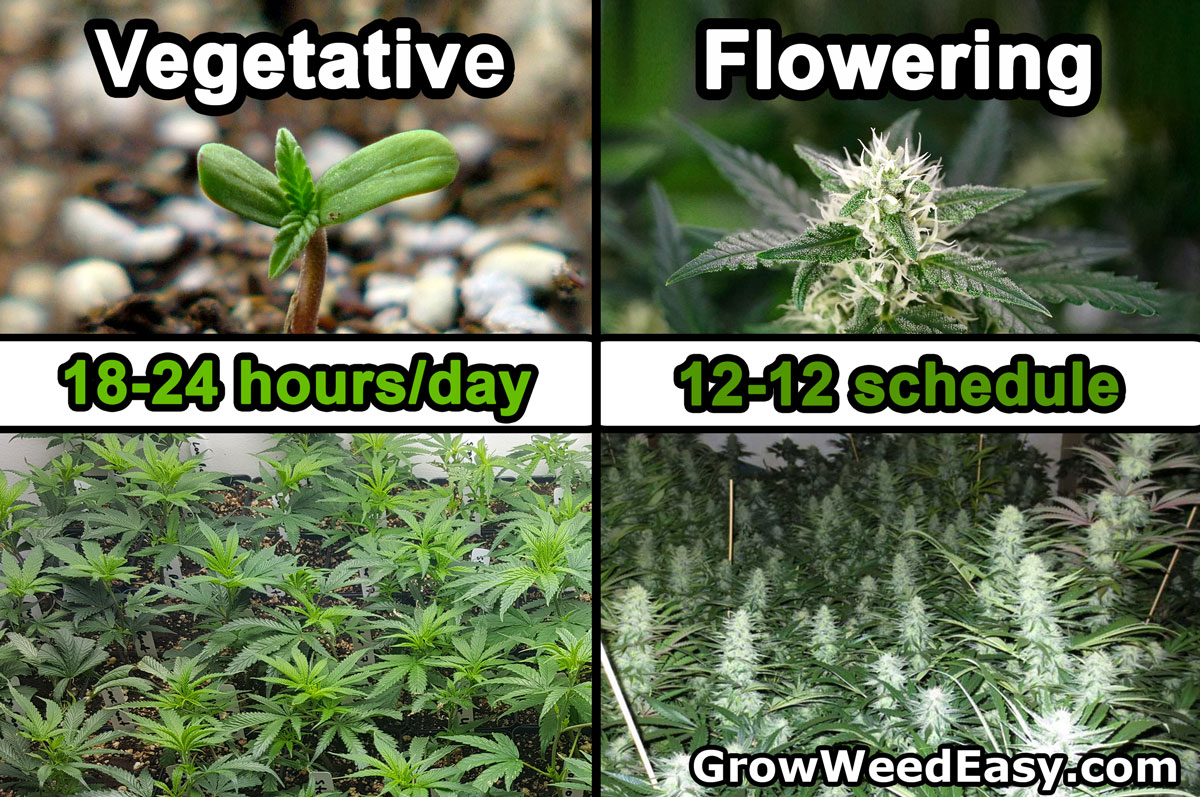
Quick Summary: Cannabis plants stay in the vegetative stage and keep getting bigger and bigger with long days (18-24 hours a day). Cannabis plants start flowering when you give them long nights (12 hours uninterrupted darkness every day, often called a 12/12 light schedule).
What you need: Here’s everything a grower needs to give photoperiod cannabis plants the perfect light schedule.
- Automated light setup – A quality cannabis LED grow light on a timer in a light-proof grow tent. This gives you total control over a plant’s light schedule.
- Photoperiod seeds – My current 3 recommended photoperiod strains for germination rates, yields, and bud quality are Mandarin Cookies, Dos Si Dos, and Purple Ghost Candy.
Get cannabis seeds of the strain you want.
Cannabis Grow Timeline:
- Vegetative Stage: Seedlings immediately start in the Vegetative Stage.
- Flowering Stage: You initiate the Flowering (Budding) Stage by giving a 12/12 light schedule, and ends at Harvest.
Learn more about the cannabis timeline.
While not technically a “stage,” all grows start with cannabis seeds or clones.
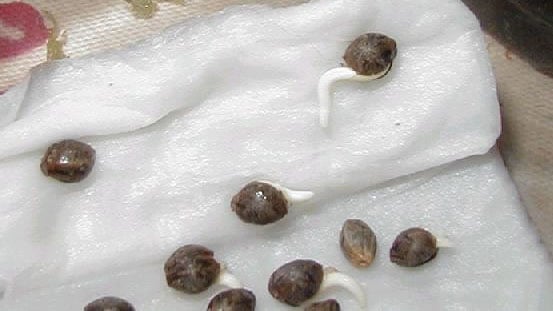
Seedlings are cannabis plants you start by germinating a seed. Seeds can be convenient for home growers. Seeds can be stored, then germinated whenever you want. Additionally, seedlings are mostly predictable, tend to grow symmetrical, and don’t come with bugs or diseases.
Clones are pieces of stem cut from a “mother” plant that now has roots. The advantage of clones is they come with leaves and roots, so they tend to grow much faster than a seed which has to start from scratch. The disadvantages of clones are you have to know someone with clones, they could come with bugs or viruses, and grow with less symmetry than seedlings. However, making clones at home takes out several of those disadvantages.
Indoors
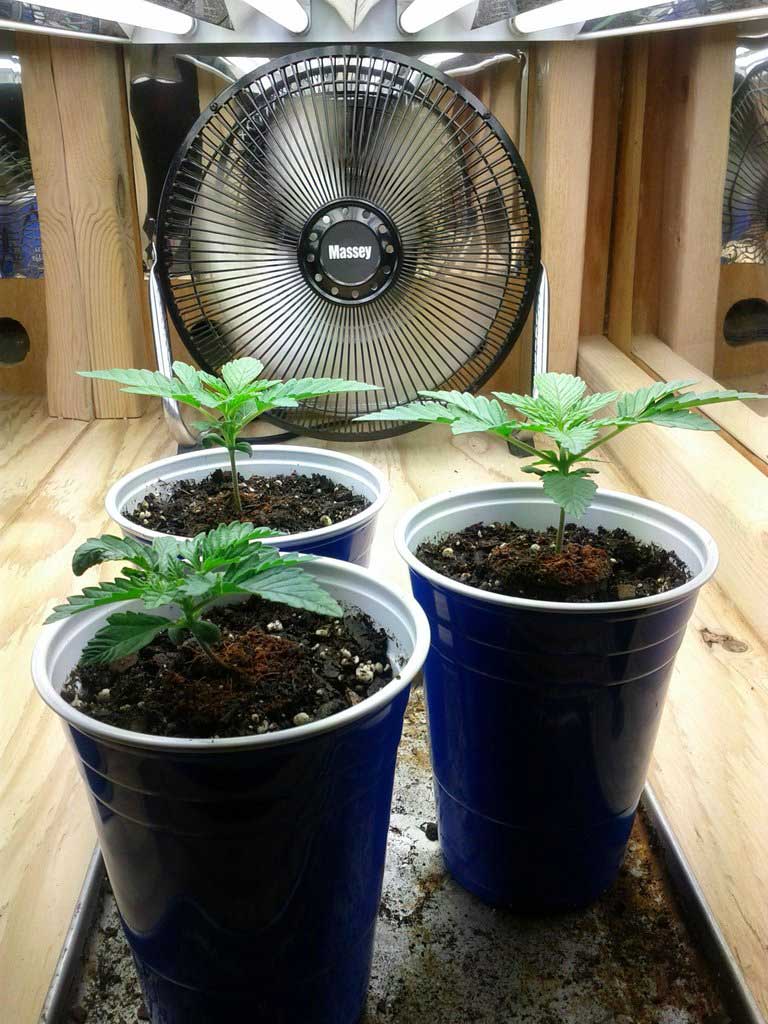
Plant your cannabis seeds or clones when you’re ready to start growing!
Outdoors
Many outdoor growers start their plants indoors to give them a headstart before putting plants outside. Learn how to grow cannabis outdoors.
If you’re growing cannabis outdoors with seeds, you should wait until a few weeks after the spring equinox to put your seeds outside. In the northern hemisphere this means seeds go outside April or later, In the southern hemisphere, seeds go outside October or later.
For growers starting with cannabis clones, generally you should wait a few weeks longer than with seeds. Cannabis clones are more prone to flowering early outdoors than seeds, so you might want to put your clones out in late Spring or early Summer. (What are clones?)
If you live in a cold climate, you must also wait until after the last frost before putting your plants outside. Freezing temps kill cannabis plants. Strain choice is very important. Some strains flower earlier than others. For outdoor growers in cold climates, it’s important to make sure you grow a strain that is matched up with your local weather, so that plants are ready for harvest before temperatures drop.
If you have short summers where you live, it’s recommended to grow auto-flowering seeds, which just need 2-3 months of warm weather before they’re ready to harvest.
Auto-flowering are ready to harvest in 2-3 months. This Gorilla Cookies auto needed 75 days from seed to weed. Grown by Jimbo Jones.
Vegetative Stage – Stems and leaves only
The vegetative stage is one of the most important parts of the life of your cannabis plant.
Vegetative plants only grow stems and leaves. No buds yet!
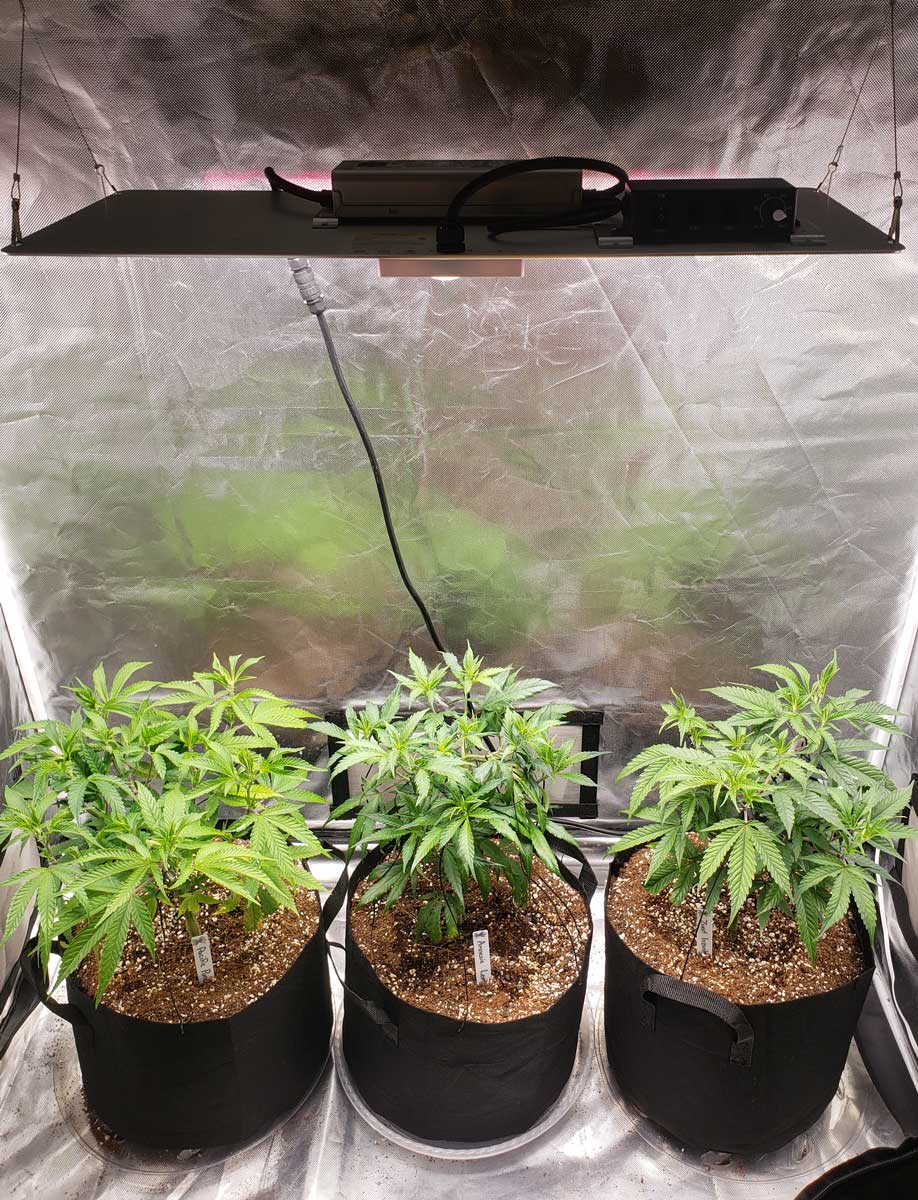
The vegetative stage is the growing stage of the plant. When in veg, cannabis plants grow bigger and taller, growing only stems and leaves. As a grower, you are able to control the size and shape of your plants in the vegetative stage using simple training methods.
Did you know cannabis plants can be grown in a mini tent if you use training methods to keep them small?
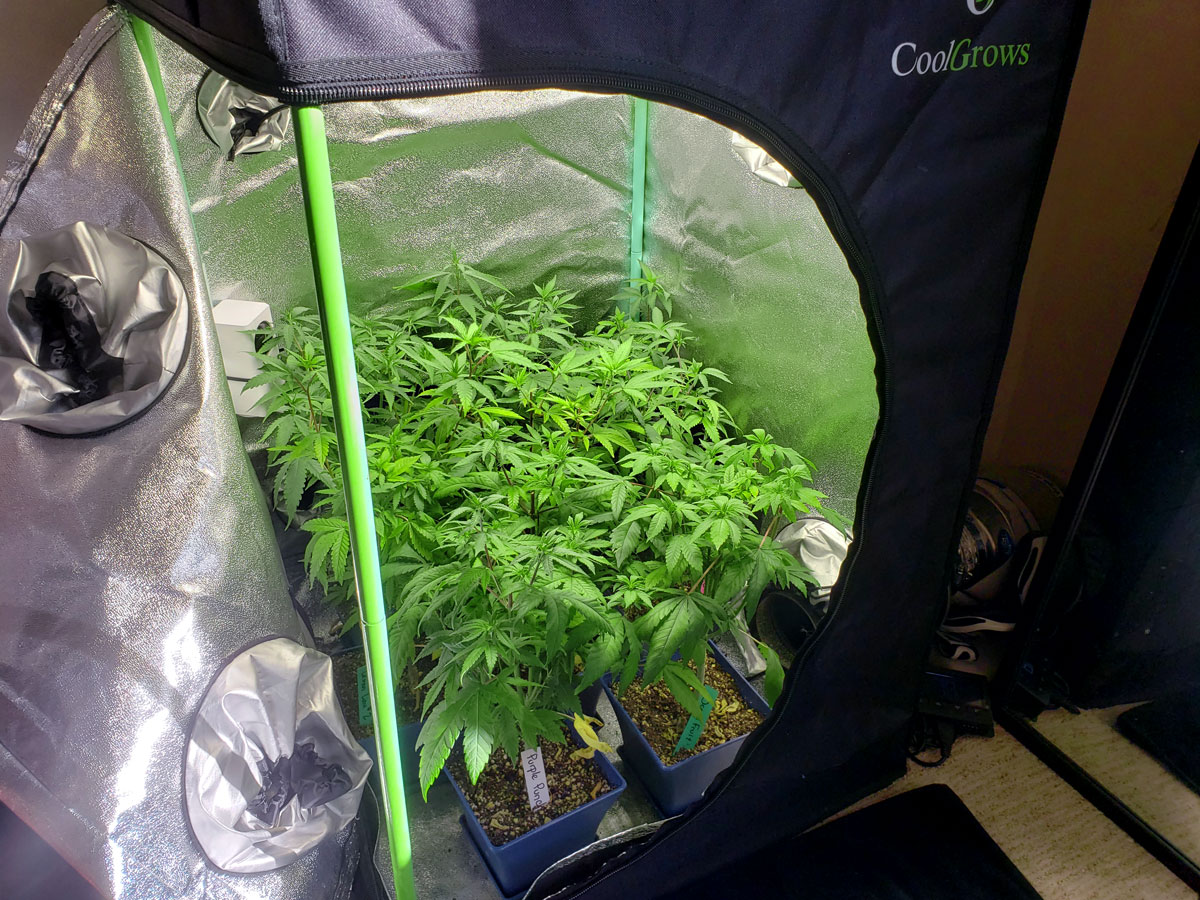
During the vegetative stage plants tend to grow very fast, especially when conditions are right.
What keeps cannabis in the vegetative stage?
Long days keep cannabis plants in the vegetative stage. This simulates summer. You can keep a cannabis plant in the vegetative stage for months or even years, as long as the plant continues to get 18+ hours of light per day.
Give long days, and cannabis plants stay in the vegetative stage and keep getting bigger and bigger.
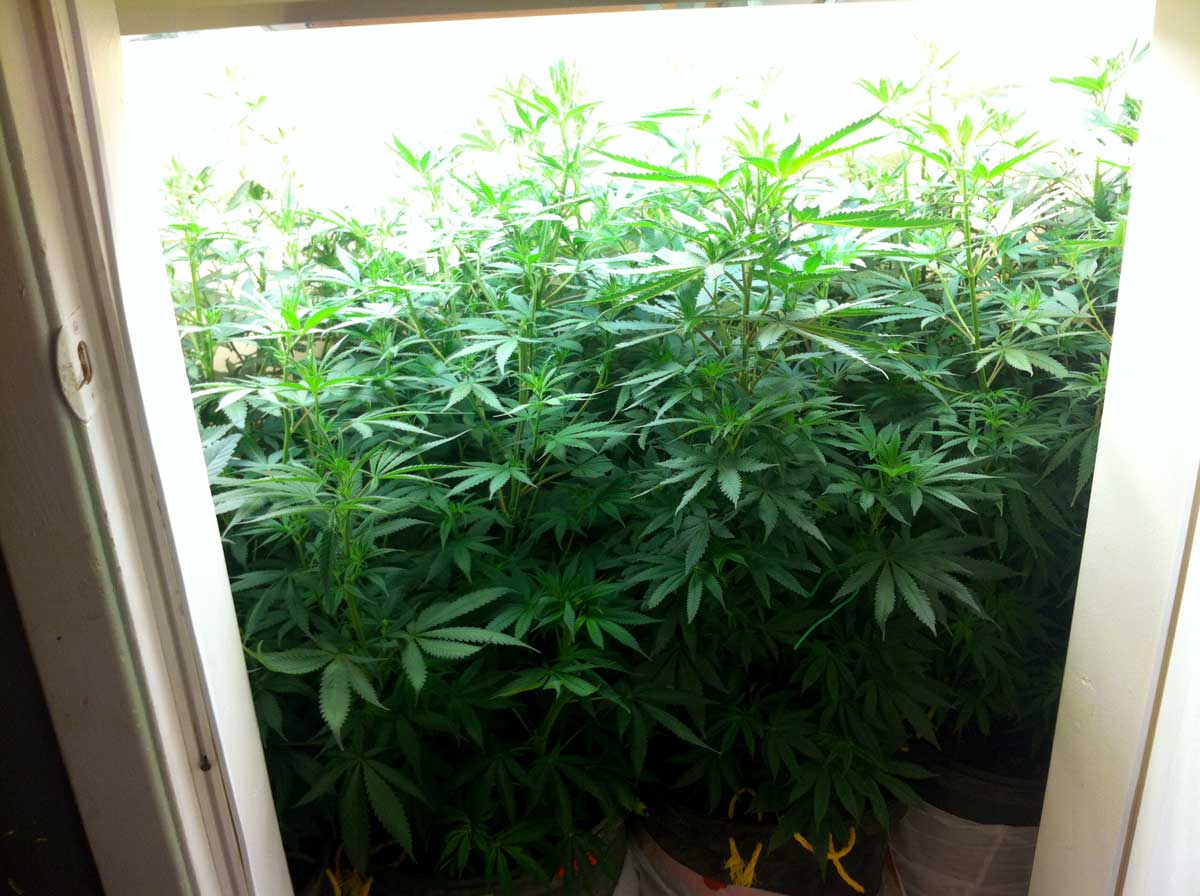
Cannabis will stay in the vegetative stage as long as the plant gets long days (more than 18 hours of light each day)
Whether you’re growing indoors or outdoors, you must make sure your cannabis plants get at least 13 hours of light each day to stay in the vegetative stage. If your plant gets a few long nights, it may start budding before you want.
The plant can receive as much as 24 hours of light a day while in the vegetative stage. Many indoor growers provide 18-24 hours of light a day (known as 18-6 or 24-0 light schedules) during the vegetative stage to encourage faster vegetative growth.
Don’t want to worry about light schedules? For growers that don’t want to pay attention to light schedules, there are auto-flowering strains of cannabis, which automatically go through their whole life in 2-3 months no matter what light schedule is provided. For some growers, an auto-flowering strain may be more simple than a traditional (photoperiod) strain.
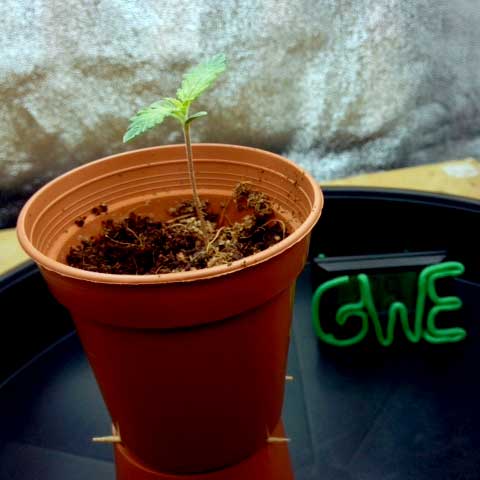
Indoors
Most indoor growers provide 18-24 hours of light a day (known as 18-6 or 24-0 light schedules). Giving your cannabis plants more hours of light each day in the vegetative stage will encourage faster growth.
Lingo: When a grower provides 18 hours of light a day and 6 hours of darkness, this is commonly known as the 18/6 light schedule. For 24 hours a day, this is referred to as the 24-0 light schedule (or just 24 hours a day).
Outdoors
As long as your plant is getting plenty of light a day, your plant will automatically stay in the vegetative stage from late spring until late summer. Every strain is a bit different.
Lean how to grow weed outdoors.
Flowering Stage
Cannabis starts budding when plants get at least 12 hours of uninterrupted darkness each night. After plants start budding, they must continue to get long dark nights until harvest or they may revert back to the vegetative stage.
Indoors
When to start flowering a cannabis plant? When it’s half the final size. That’s because plants about double in size after switching to the flowering stage.
Initiate 12/12 when plants are half the final desired size, because they double in size in the flowering stage.
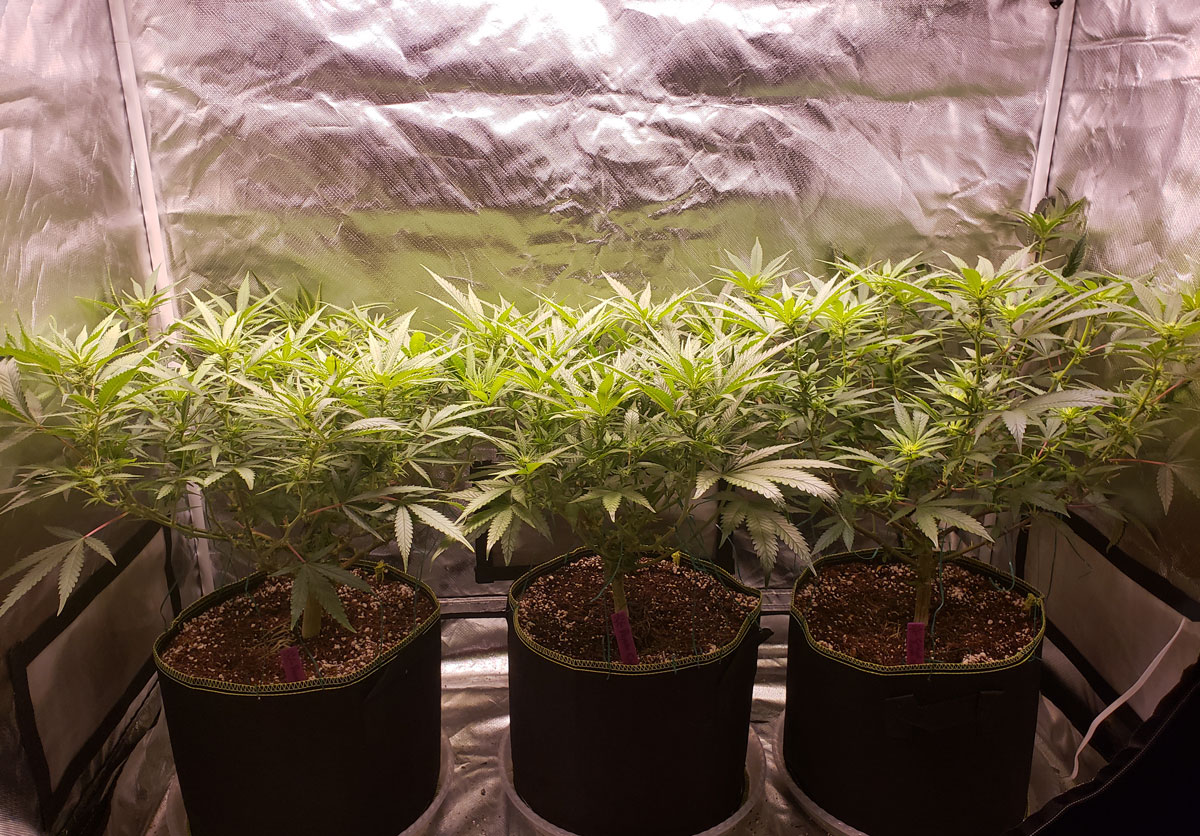
Indoors growers put their cannabis plants on a 12-12 schedule to initiate flowering. Outdoors the plant will naturally start budding in late summer when nights are growing longer and longer as winter approaches. Just make sure plants aren’t exposed to light during their dark period!
Learn all about the cannabis flowering stage.
Happy indoor cannabis plants in the flowering stage. (Learn how to grow cannabis like this in our course Home Grow Masterclass)
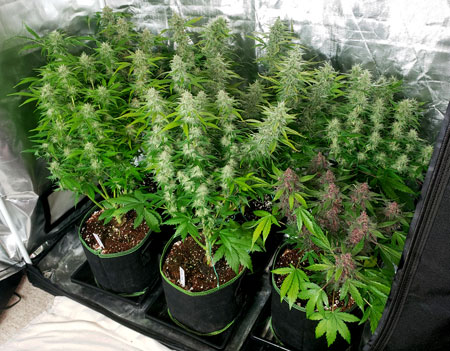
What is 12/12 lighting?
The indoor grower will need to artificially induce flowering/budding in plants by changing the light schedule so the plant receives only 12 hours of light a day, and 12 hours of uninterrupted darkness.
Once a photoperiod plant is changed over to the flowering (12/12) light schedule, there is generally 8-10 weeks (average) before the plant’s buds are ready for harvest. The flowering stage length depends on the strain, and can last from another 6 weeks (fast photoperiod strains) to 14+ weeks (some sativa strains).
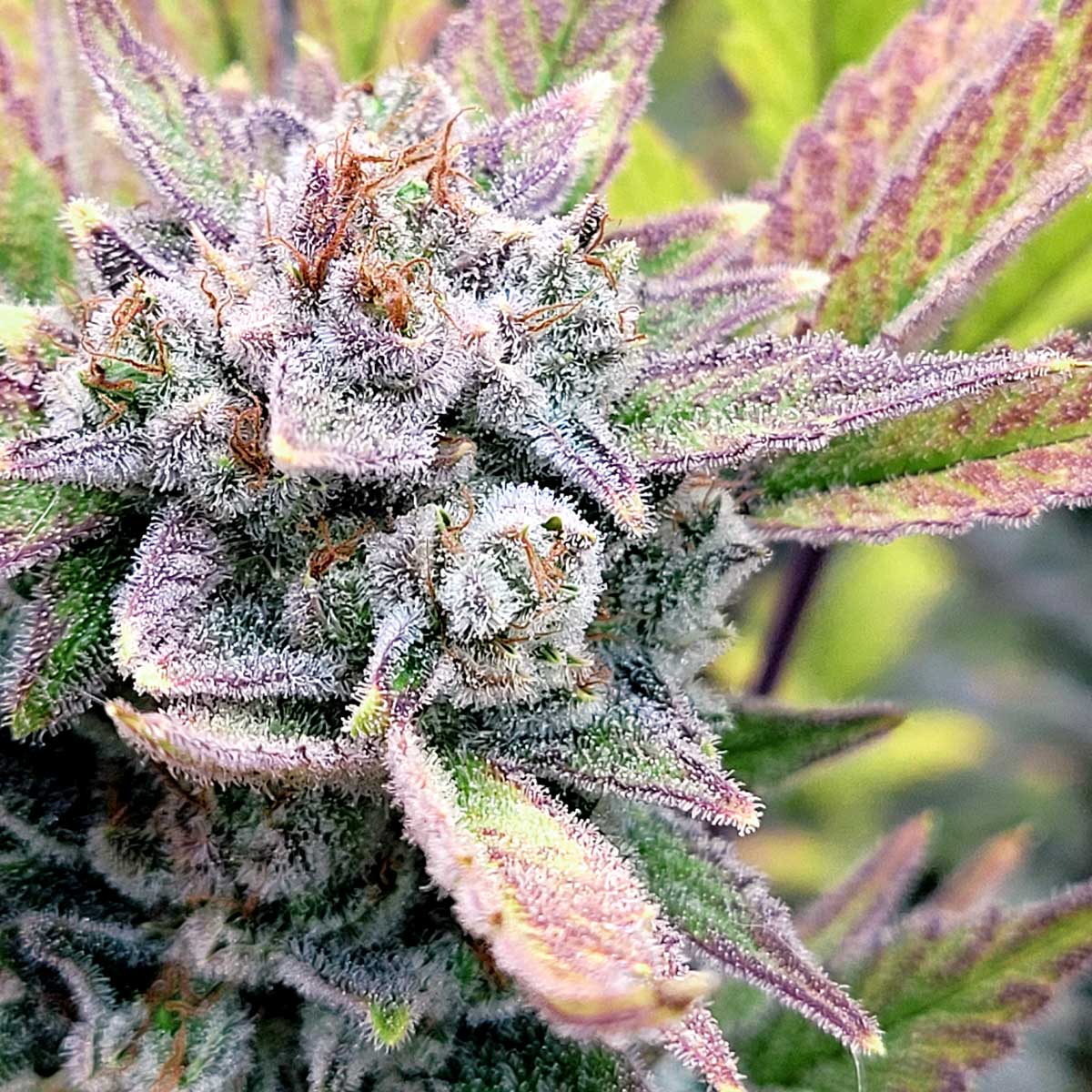
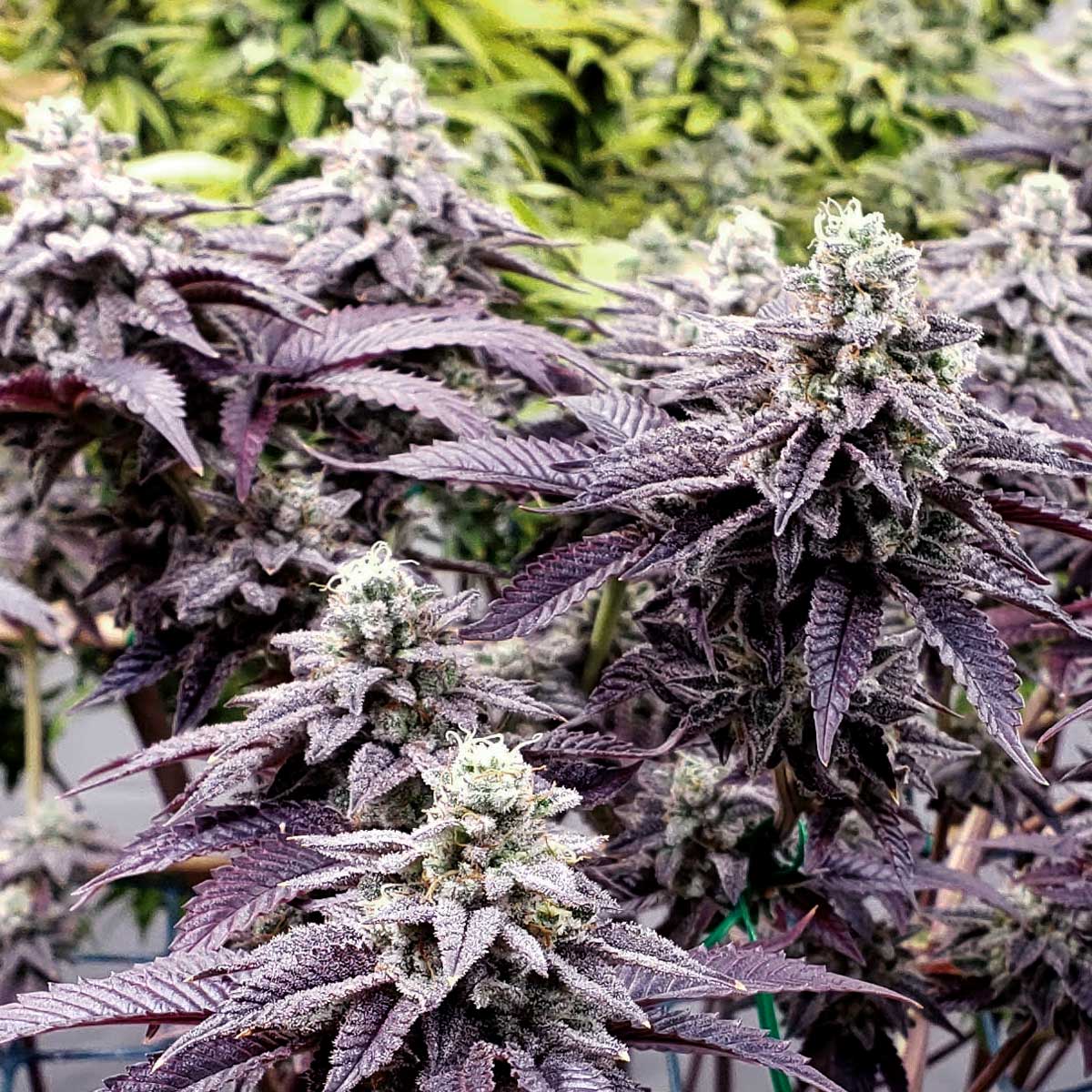
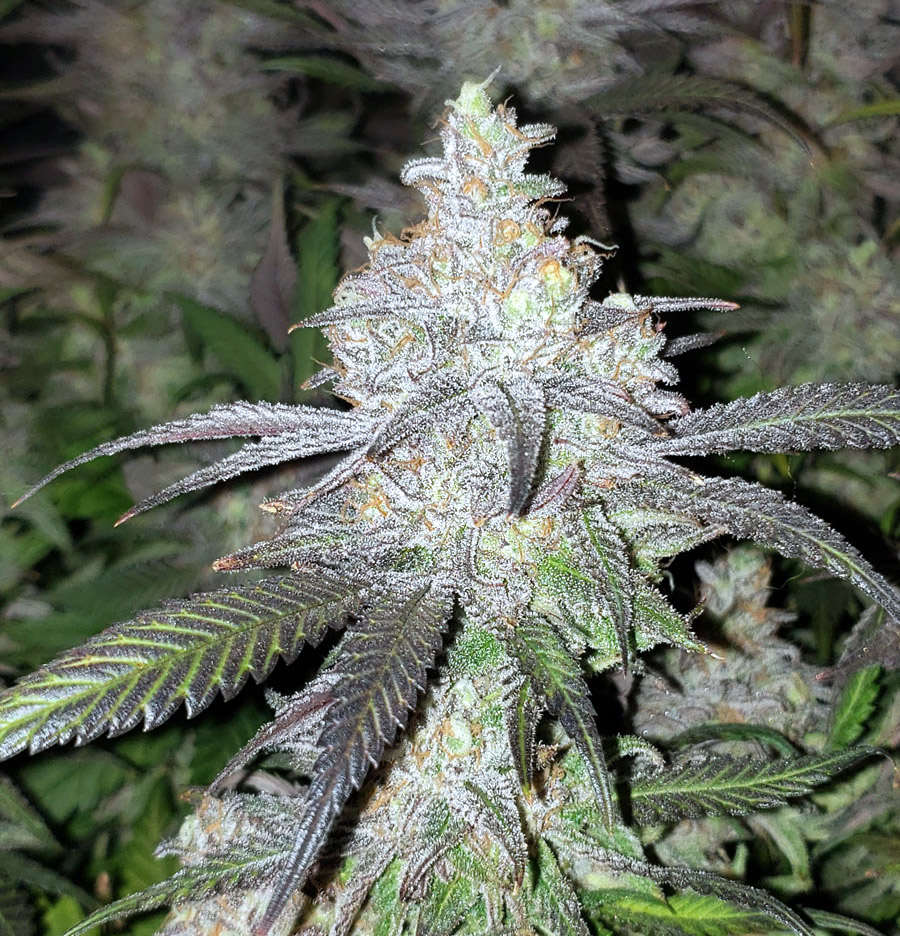
Dos Si Dos 33 by Barney’s Farm, with insane purple coloring. Grown by Max.
Outdoors
Outdoor growers wait until their cannabis plants start naturally flowering on their own, usually after mid-summer when days start getting shorter than 12 hours.
It’s important to make sure plants aren’t exposed to light at night during their dark period, even street lights or spotlights, as this can prevent cannabis plants from flowering properly.
Learn more about cannabis growing timelines
Growing Indoors? Not Sure When To Switch To Flowering?
So indoor growers have a choice to flower their plants whenever they want… When is the best time to start flowering your cannabis indoors?
The real answer is that it’s a matter of personal preference and also depends on what end result you’re looking for. There are two major considerations when choosing the right time to switch to 12/12, the age of the plant and the height of the plant:
Age: Some growers feel that a marijuana plant which has been grown from seed will not produce as many buds or have enough resin production if the plant is not given at least 60 days in the vegetative stage to mature before it’s changed over to the flowering stage. This is not true. many growers initiate flowering much sooner in order to keep plants small and short. Just know that no matter what you do, a young cannabis plant will not start flowering until it is 2-3 weeks old. Even if you put a seedling on a 12-12 schedule from the beginning, it will not start properly budding for about 3-4 weeks. When growing with cannabis clones, age is not an issue and growers can switch directly to flowering once your clone has established roots. This is because even though a clone may be small, it’s still a ‘mature’ plant since it is made of a piece from a mature plant. Rooted clones tend to grow much faster for the first few weeks than plants grown from seed. In any case, age is not much of an issue, and you should switch your light schedule at the time that best fits your needs.
Seedlings can’t start flowering until they’re 3-4 weeks old.
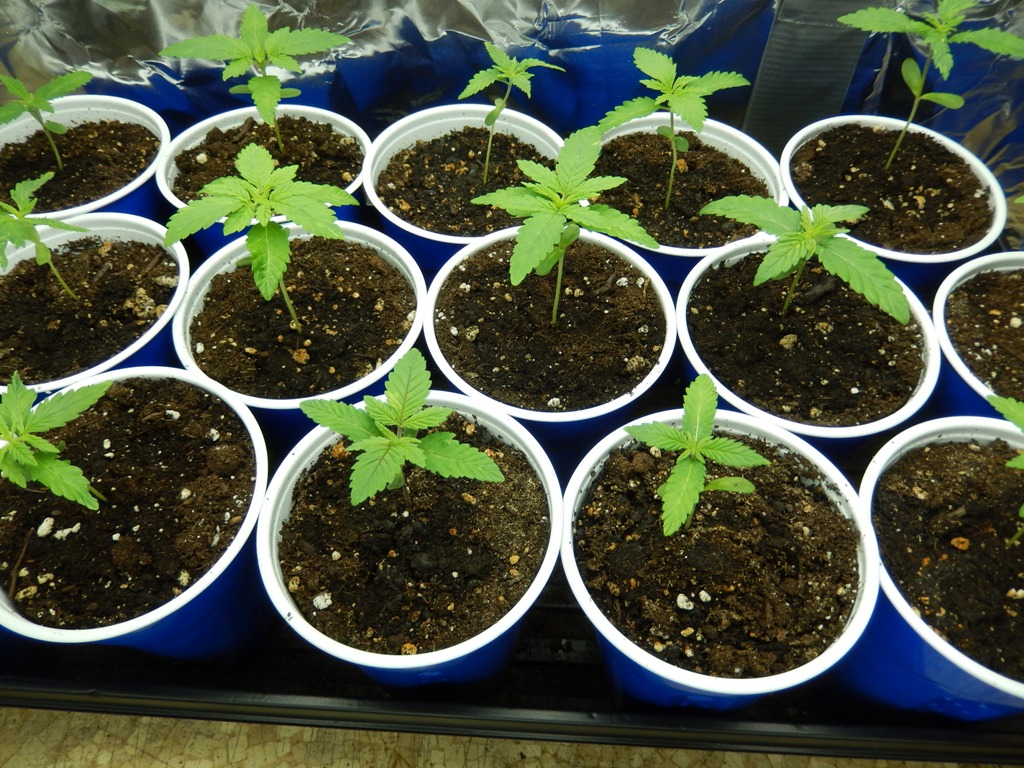
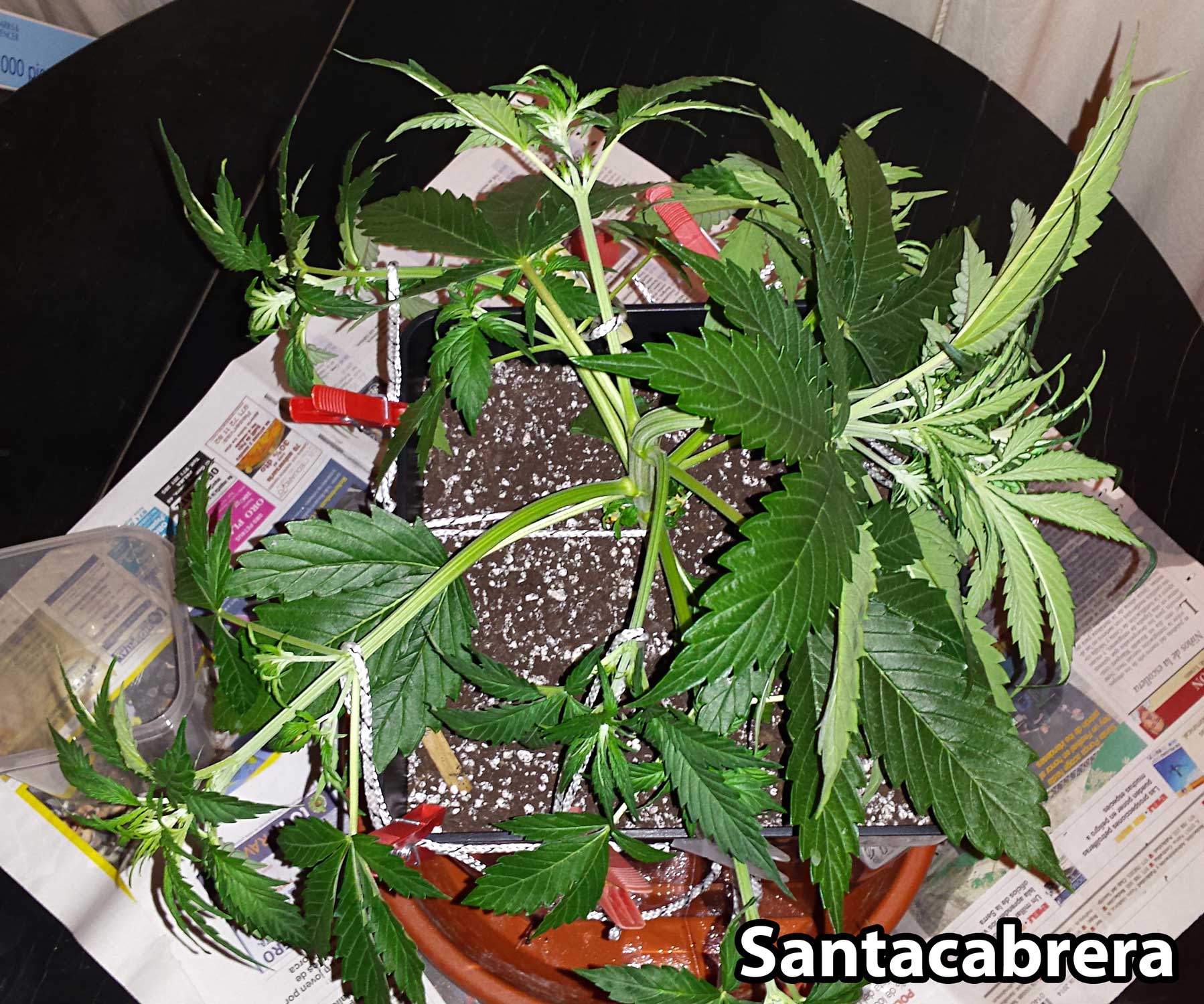
Height: A general rule is that your marijuana plant will double in size during the flowering stage from the point where you first change over the light schedule to 12/12. Some plants can triple in size, some will grow less, but a good rule of thumb is to change your light schedule over to flowering when your plants have reached half of their final desired height. Bending, known as “LST” or “low stress training” can be used to control colas that get too tall. Simply bend too-tall colas down and away from the center of the plant. Some growers will even slightly break or “supercrop” branches to get them to bend at a 90 degree angle. For those growing in a small space, height may be the primary concern. However, there are many techniques available to grow a short, bushy weed plant or basically train your cannabis plant to grow into any shape you want.
Here’s an example of Low Stress Training (LST) to keep a plant short:
In optimal conditions if height and space is not an issue, you would probably want to vegetate your cannabis plant for 60 days or more before switching it over to flowering. This gives your plant plenty of time to grow big (so you get bigger yields), and allows new growers to dial in their grow before plants enter the sensitive flowering stage. In the vegetative stage, it is easy to recover from problems, but problems are a lot more serious in the flowering stage, where mistakes can dramatically hurt your final yields.
Giving cannabis plants more time in the vegetative stage, and taking time to train them to fit your space, gives you the best final yields. However, if space is tight, then it’s better to switch when the plant is half the final desired height.
A flat, tabletop shape maximizes cannabis yields.
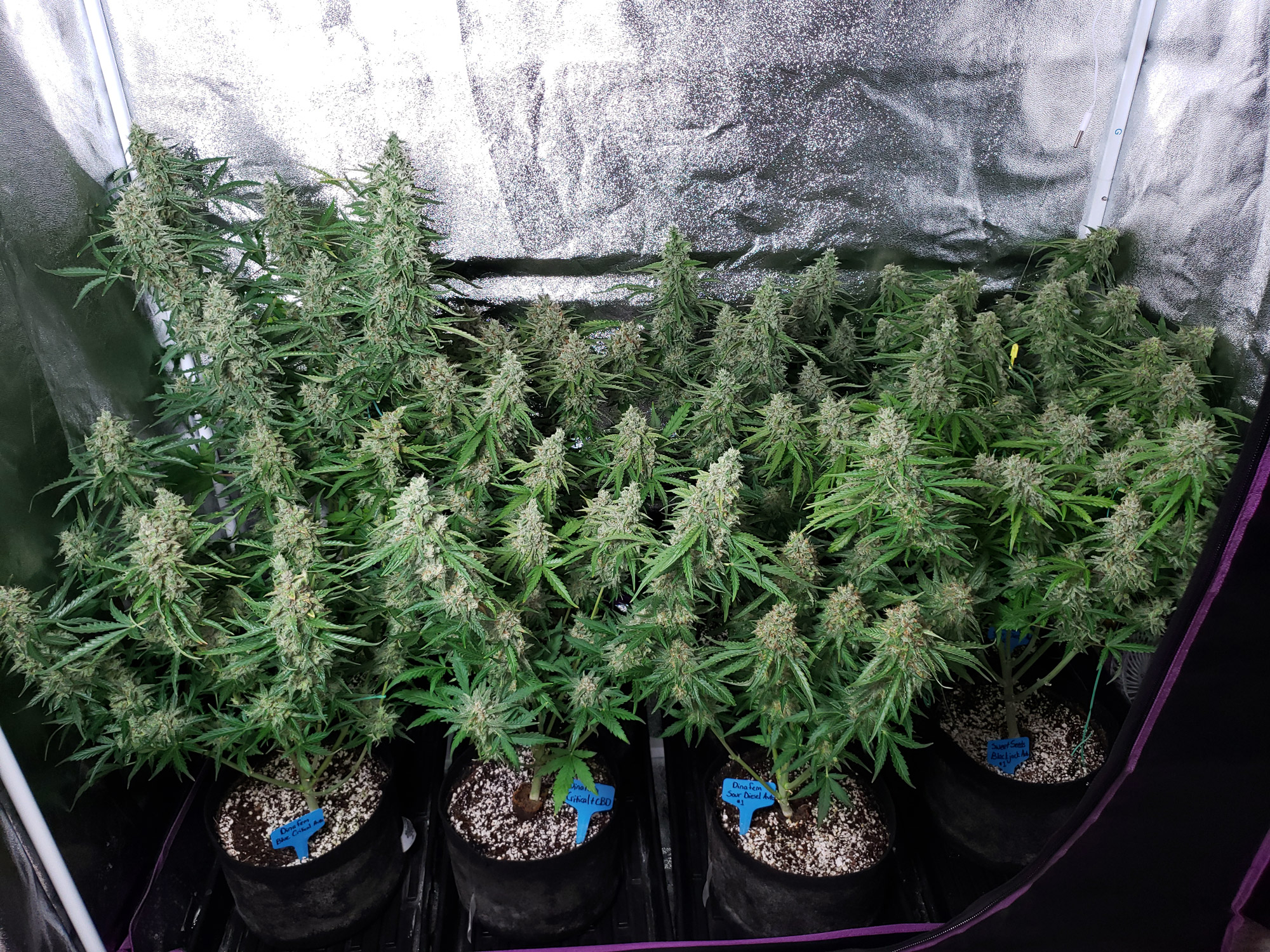
You get the best yields and bud quality if all buds are about the same distance from the grow lights.
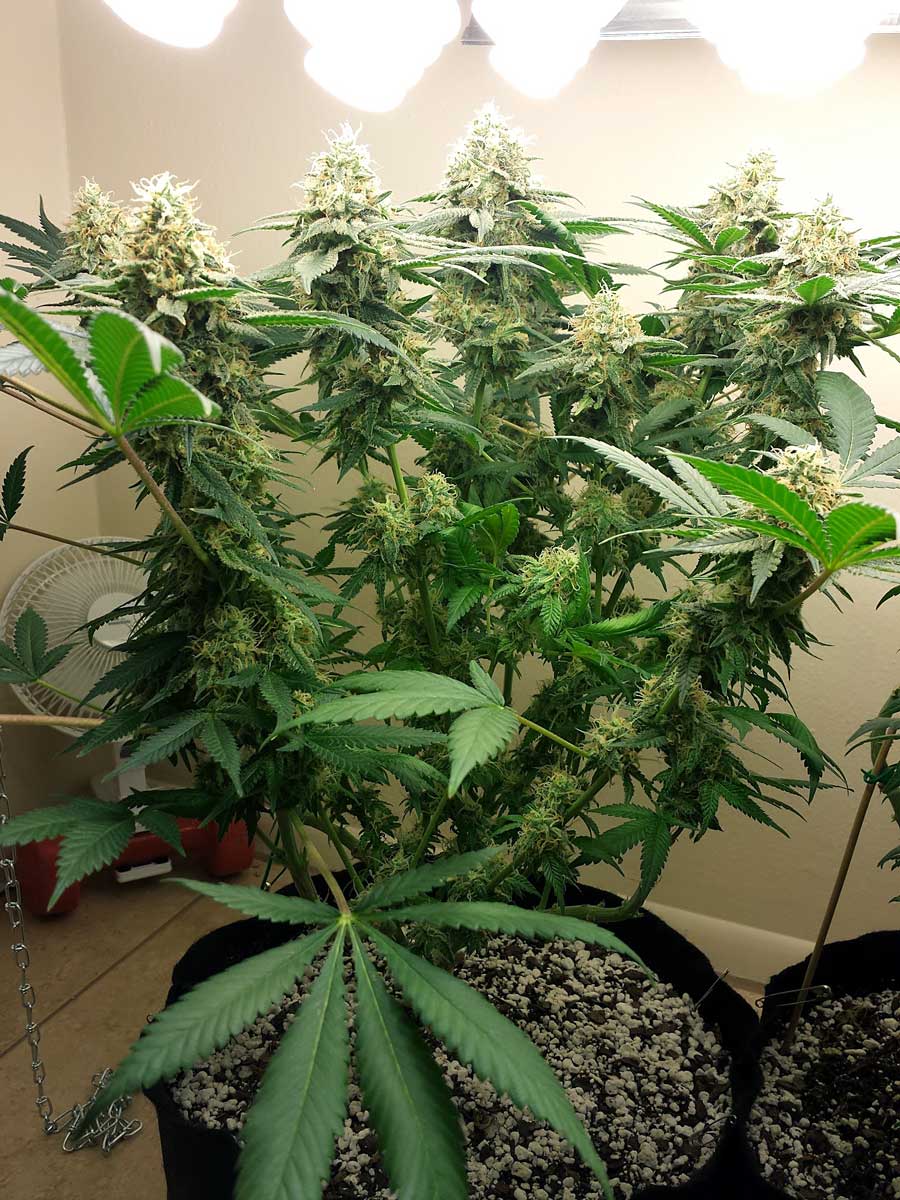
After the vegetative and flowering stage are over, it is time to harvest your plants!
When do I harvest my cannabis? https://www.growweedeasy.com/harvest
Peyote Critical cannabis bud – ready to harvest!
Jump to…
Teach me the basics of growing cannabis
How long does it take to grow cannabis?